Enterprise Development Grant (EDG): Status and EDGE

The Enterprise Development Grant (EDG) funded up to 50% of qualifying costs for SMEs on projects to upgrade, innovate or expand overseas. Key update: EDG closed to new applications on 29 September 2026 and is replaced by the unified EDGE Grant. Ongoing EDG projects are still supported; new projects apply under EDGE.
Update (2026): The Enterprise Development Grant (EDG) closed to new applications on 29 September 2026. From 30 September 2026 it is replaced by the unified EDGE Grant, which streamlines EDG, the Market Readiness Assistance (MRA) grant and the Productivity Solutions Grant (PSG) into one scheme. If you have an ongoing EDG project or submitted before the cut-off, it continues to be processed and you can claim on completion via the Business Grants Portal. For a new project, you now apply under EDGE.
What EDG funded
EDG supported projects that help a company upgrade, innovate or expand overseas, under three categories: Core Capabilities, Innovation & Productivity and Market Access. It funded qualifying project costs such as third-party consultancy fees, software and equipment, and some internal manpower cost, on a reimbursement basis after project deliverables were met.
- SMEs: up to 50% of qualifying costs (up to 70% for eligible sustainability projects).
- Non-SMEs: up to 30%.
Who qualified
The eligibility test carried over into EDGE:
- a business entity registered and operating in Singapore;
- at least 30% local shareholding, held directly or indirectly by Singapore citizens and/or PRs; and
- financially ready to start and complete the project.
What EDGE means for you now
Under EDGE, you apply by activity rather than by picking a grant, across more than 150 activities. Each company has a grant cap of S$100,000 for all eligible activities per 1 April–31 March grant year (the cap resets each 1 April), within which up to S$30,000 can go to single-function digital solutions, integrated systems and pre-scoped equipment. Support is up to 50% for SMEs and 30% for non-SMEs, rising to up to 70% for SMEs on internationalisation and sustainability activities. A company is an SME if its group annual sales turnover is at most S$100 million or group employment size is at most 200. The at-least-30% local-ownership rule still applies, additional eligibility, operating-location and financial requirements may apply depending on the activity, and you apply through the Business Grants Portal with Corppass. You must submit before starting work or paying a supplier, and each activity needs its own application — support level, eligible costs, deliverables and project duration vary by activity.
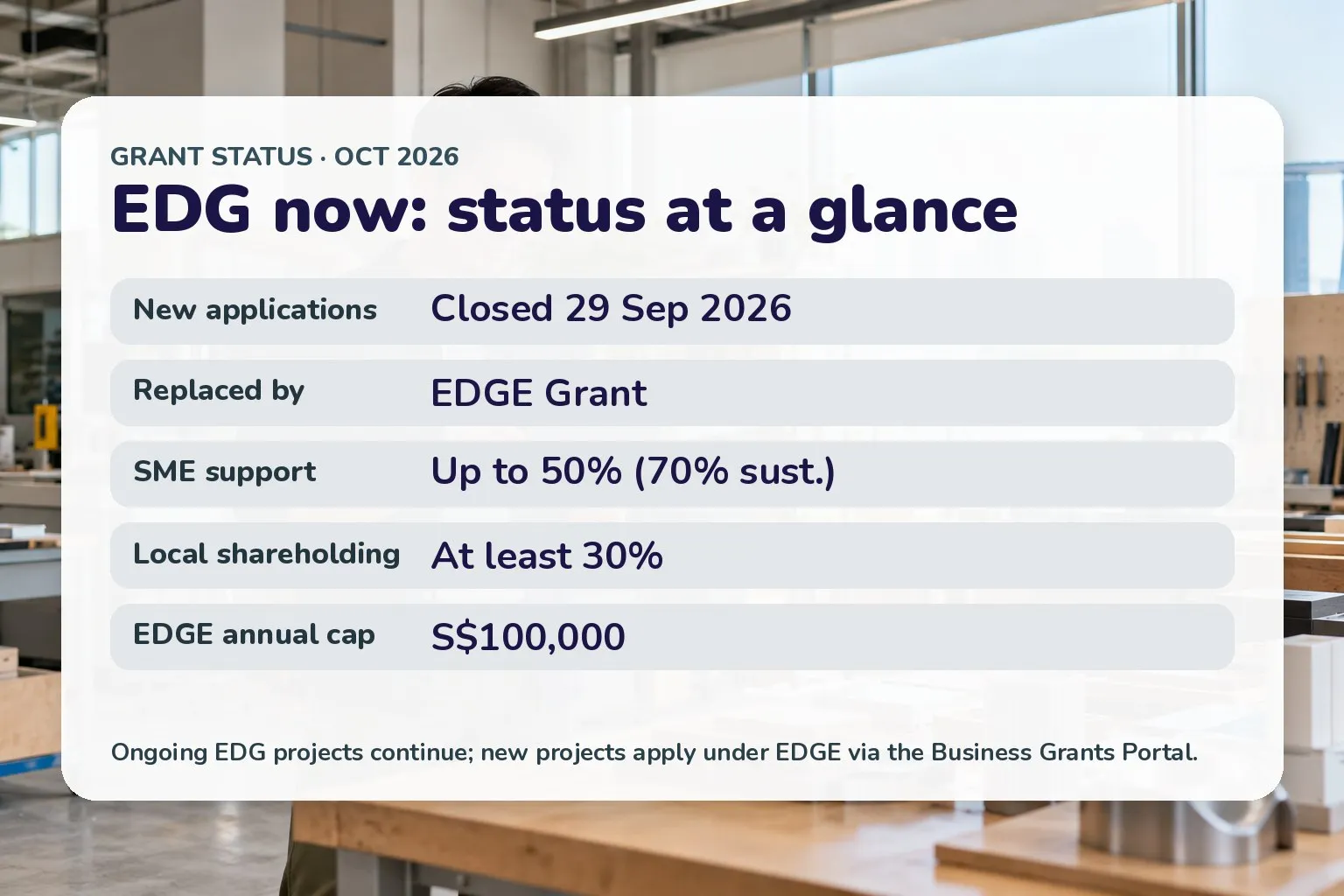
EDG’s status and the EDGE Grant that replaced it. Graphic by StartBizSG, based on Enterprise Singapore information, as of October 2026.
Next steps
If you were planning an EDG application, read it as a guide to what EDGE still supports, then apply under EDGE. For technology adoption specifically, see our note on the Productivity Solutions Grant (PSG), which closed at the same time and also moved under EDGE. The tax treatment of a grant depends on its purpose: revenue grants are generally taxable, while capital grants may reduce the expenditure eligible for deductions or capital allowances — see corporate tax. You’ll need Corppass — the same login used for GST and other filings.
General information and official rules, not financial advice. Check Enterprise Singapore for current EDGE activities, caps and eligibility before applying.
Sources
- Enterprise Development Grant (EDG) — Enterprise Singapore (as of October 2026)
- FAQ: EDGE Grant — Enterprise Singapore (as of October 2026)